
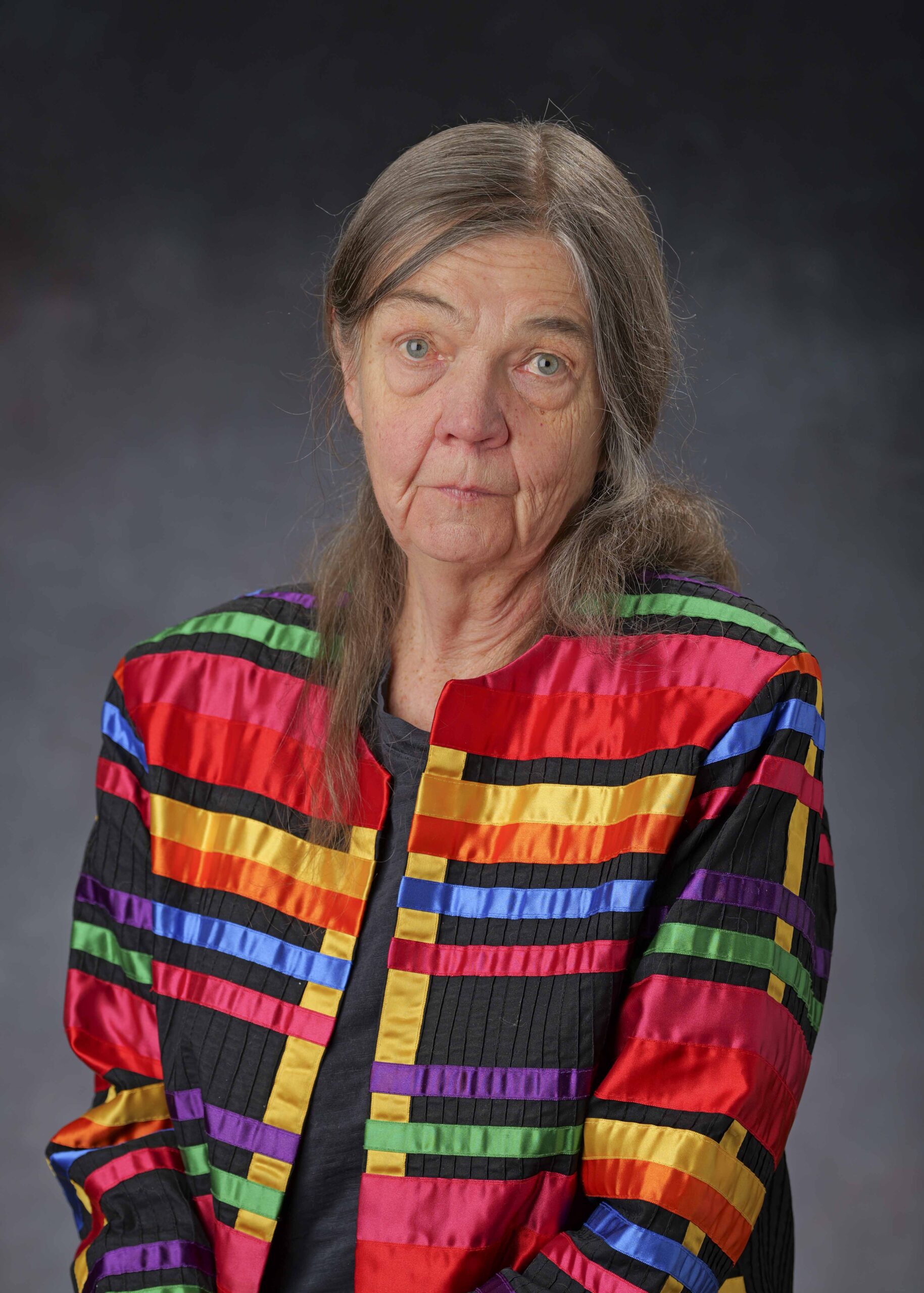
Who Is Patricia (Patty) Nelson Limerick?

Patty is a historian of the American West based in Colorado. In the past, she’s written some books and taught some classes, many of which went well and even received some praise. These days, here in the mid-2020s, she has refocused her energies toward spreading a message that has long served as her guide. Early in life, Patty developed a faith that is reluctant to surrender:

If providers of historical perspective could break free from the constraints of academia, a great share of human energy would shift from the escalation of conflict to the solving of problems.

Has that faith been definitively validated?

Not in the least.

Is that failure of validation now pushing Limerick to renounce her faith?

Not in the least.

Carrying the Applied Historian’s equivalent of a driver’s license, Limerick has traveled between academia and the wider public since the 1980s. Over that half-century, she has rarely fallen victim to existential dread, and Limerick is now determined to share her peculiar but persistent faith. She is now inviting enthusiasts for history to come together at the Applied History Hub and to pursue and seize the opportunities to turn hindsight into foresight.

A side question: did Limerick ever have an actual, material license identifying her as Applied Historian?

No, she did not.  

But you are about to be luckier:  show up from time to time at the Applied History Hub, and an opportunity to acquire an Applied Historian Passport could be in your future.

My Experiences as an Applied Historian

No one has ever turned into an Applied Historian by following a straight line from A to B. Nor have they ever arrived at the moment of announcing to the world, “Now I am an Applied Historian.” On the contrary, there are many routes to this destination and, as destinations go, this one is very dynamic. Your adoption of the role of Applied Historian is unlikely to be fixed and settled. You will frequently be picked up and deposited in situations that you did not foresee or even choose. In other words, there is never a shortage of adrenaline in this enterprise. For a while, opportunities, openings, and invitations may take their time appearing. It may seem as though a process of snowballing will never start, and then, in an absurdly rapid shift, it will seem as though the snowballing will never stop. This leads us to a major-league paradox: the key to success as an Applied Historian is the willingness to take on projects that offer no guarantee of success. In truth, it is a wise move to recognize that success is so difficult to define that there is no point in placing its pursuit at the center of your attention.
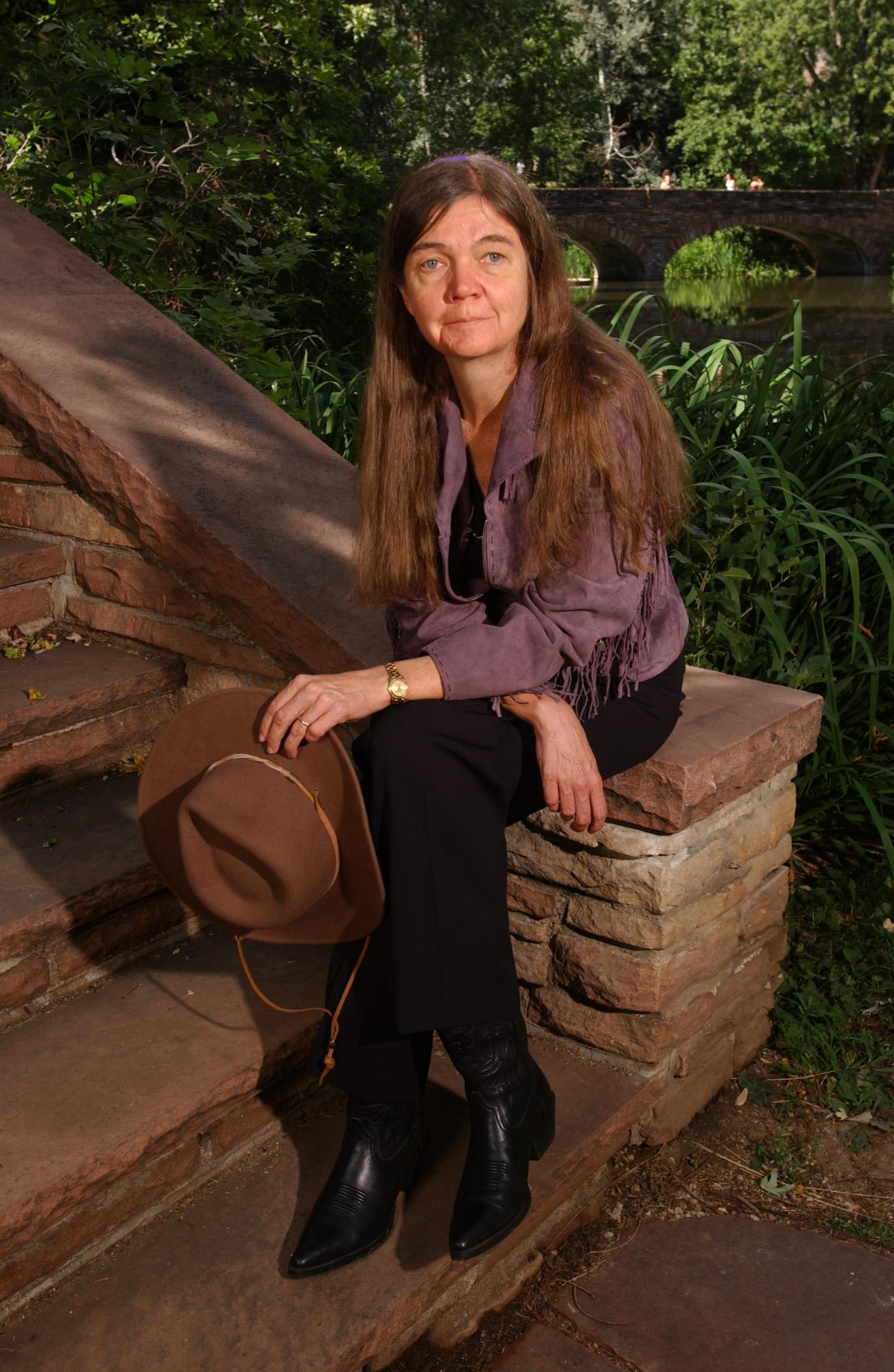
Some real-life parables that convey this paradox.

In 1987, the Chancellor of the University of Colorado asked me to write a report on the controversial name of a building on this campus. In 1961, in an episode of bureaucratic befuddlement, this dormitory was named after David Nichols, an early settler in Colorado who played a part in the founding of the University. Nichols held a number of roles in Colorado history: member of the territorial legislature, Boulder sheriff, Colorado lieutenant governor . . . and captain in the Third Colorado at the Sand Creek Massacre. I accepted the assignment to write this report without any assurance from the Chancellor—or from myself!—that I would be a success. On the contrary, in this first venture, I faced up to the key recognition of the Applied Historian: This is not about me; the only question worth asking is this: “Is this a situation where I could be helpful?” I knew that the existence of a building named after a leader at Sand Creek weighed on the spirits of Native American students at CU. That reality led straight to my recognition of my bedrock guidance system: “Whatever you do, do not make this situation worse for the people who are affected by it.”

The outcome? I wrote the report; the Regents of the University of Colorado—by a narrow majority—removed the name “Nichols,” and renamed the building Cheyenne-Arapaho Hall. Whatever outcomes I would want anyone to notice from my first run as an Applied Historian, an appraisal of my “success” would register at the bottom of that list. The fact that a burdensome historical legacy got addressed secured an undisputed first place on that list.

The Chancellor of the University gave me this assignment. Did that mean that it is the fate of Applied Historians to wait around for someone else to notice that they could be useful?  

That has not been my experience.

Once the snowballing of opportunity got going for me, it never quit. For a while I was still subject to episodes of bewilderment: was I really in auditorium, about to speak to an audience of engineers, managers, and regulators at the International High Level Nuclear Waste Management Conference in Las Vegas, or would I soon wake up from this implausible dream?  But my capacity—to be surprised by the improbability of the company I was in—soon withered. I stood at podiums aplenty, holding forth on water infrastructure, renewable and extractive energy development, the cultural traditions of ranching, immigration policy, the management of sites of nuclear weapons production, rural/urban tensions, and multiple dimensions of federal, state, tribal, county, and city governance.  During Q + A sessions, I often felt that one more question would push me into the abyss where I could no longer conceal my status as a newcomer and outsider with issues the other people in the room lived. And yet there was no reason to waste time and effort in that concealment, since my status was obvious to all!  

And now we get to the great consolation prize of Applied Historians:  most members of our audiences are so absorbed in the current moment, and so ill-equipped to think in longer units of time, that Applied Historians—even when perched on the cliff edge of their knowledge—can nearly always be useful by inviting everyone to join in the recognition that the dilemmas and conflicts we are facing originated long before any of us were on the planet. And this recognition, Applied Historians can remind everyone present that shouting at our contemporaries is empty, if momentarily enjoyable exercise of our voices and minds.

Inviting Applied Historians to visit, and then accepting their invitation to shift attention to historical perspective, will make put our voices, minds, and souls to much better use.

Patty Limerick is a Professor of History, the Director of the Applied History Initiative, and the Campus Partner for Academic Affairs for the Veteran and Military Affairs office at the University of Colorado at Boulder. She is the author of Desert Passages (1985), The Legacy of Conquest (1987), Something in the Soil (2000), and A Ditch in Time (2012 Limerick has received a number of awards and honors recognizing the impact of her scholarship and her commitment to teaching, including the MacArthur Fellowship (1995 to 2000) and the Hazel Barnes Prize, the University of Colorado’s highest award for teaching and research (2001). She was elected to the Academy of Arts and Sciences in 2021. Limerick has served as President of the Organization of American Historians, American Studies Association, the Western History Association, and the Society of American Historians, and as the Vice President of the Teaching Division of the American Historical Association. Limerick has given innumerable public speeches to an impossibly wide range of audiences, and made many contributions on the op-ed pages of local and national newspapers. She has advised many documentary and film projects, as well as museum exhibits, and has completed three tours as a Pulitzer Nonfiction jurist.